About Us
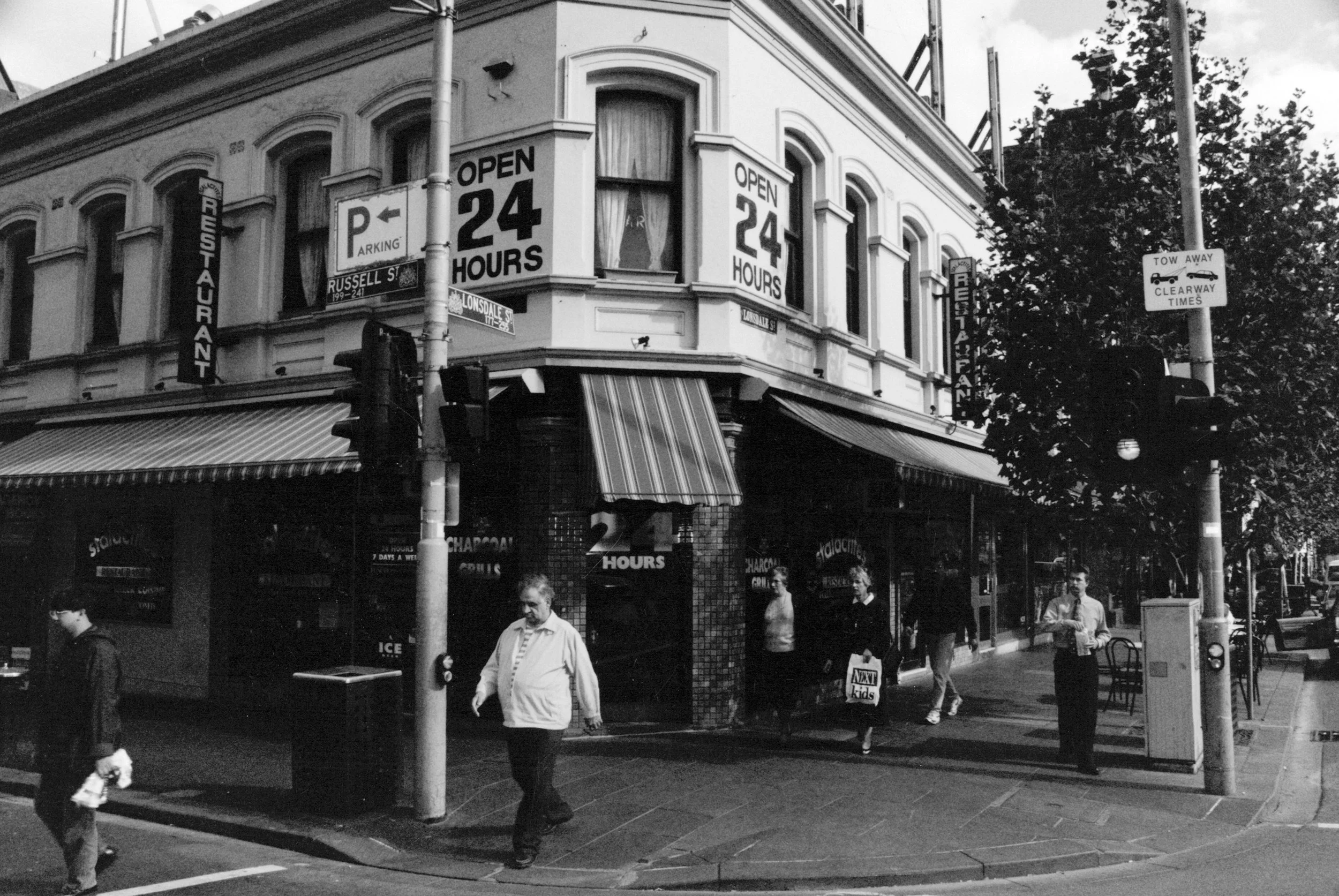
Since 1978, Stalactites has stood on the same corner of Lonsdale Street, run by the same family, cooking from the same recipes.
Nonda and Maria Konstandakopoulos opened Stalactites with Maria’s parents Kon and Kleo, and brother Peter. They laid the tiles themselves, marinated the meat, worked the ovens and the tills from morning until night. Nonda hand made the ceiling and adorned it with stalactites, modelled on the caves of Diros, near Kon’s home village in Sparta so that people who had made the same journey he had from Greece to Melbourne, would walk in and would feel if only briefly, that the distance had closed.
For years the kitchen ran twenty-four hours a day. Nonda believed all the great cities of the world live at night, and that Melbourne deserved the same. Hospitality workers and factory workers, hospital staff and shift workers, students, tradies, taxi drivers, anyone awake while most of the city slept found a meal and a table waiting. Many of those people went on to lead in business, sport, politics and public life. Most of them still come back, now with their own families and their own reasons. Rain, hail or shine, people still line up for Stalactites.
The recipes that fed them came from kitchens shaped by necessity by whatever the season offered, by proximity to the sea or to livestock, by the Greek instinct for coaxing depth from simple things. Near the coast, you ate fish or salted it for later. In farming communities, meat appeared at celebrations. The dolmades, the dips made fresh each morning, the slow-cooked moussaka: food that was never invented, only inherited. Fresh seasonal ingredients, classical technique, and enough patience to do it properly.
Stalactites sits in the stretch of Lonsdale Street where Melbourne’s Greek Quarter emerged after the Second World War, part of a longer history of Greek settlement that runs back to the late 1800s, when Greek immigrants ran saloons, tearooms, cafés and fruit stalls across the city grid. Like every wave of people who came to Australia and brought their best, they changed the place permanently. The restaurant opened in the middle of that history and has been part of it ever since. Today it is run by Nicole Konstandakopoulos, daughter of the founders, and the recipes are her inheritance as much as her responsibility.
How We Cook
The food at Stalactites comes from two distinct parts of Greece, and what happens when those two traditions meet in one kitchen is something you can taste in every dish we serve.
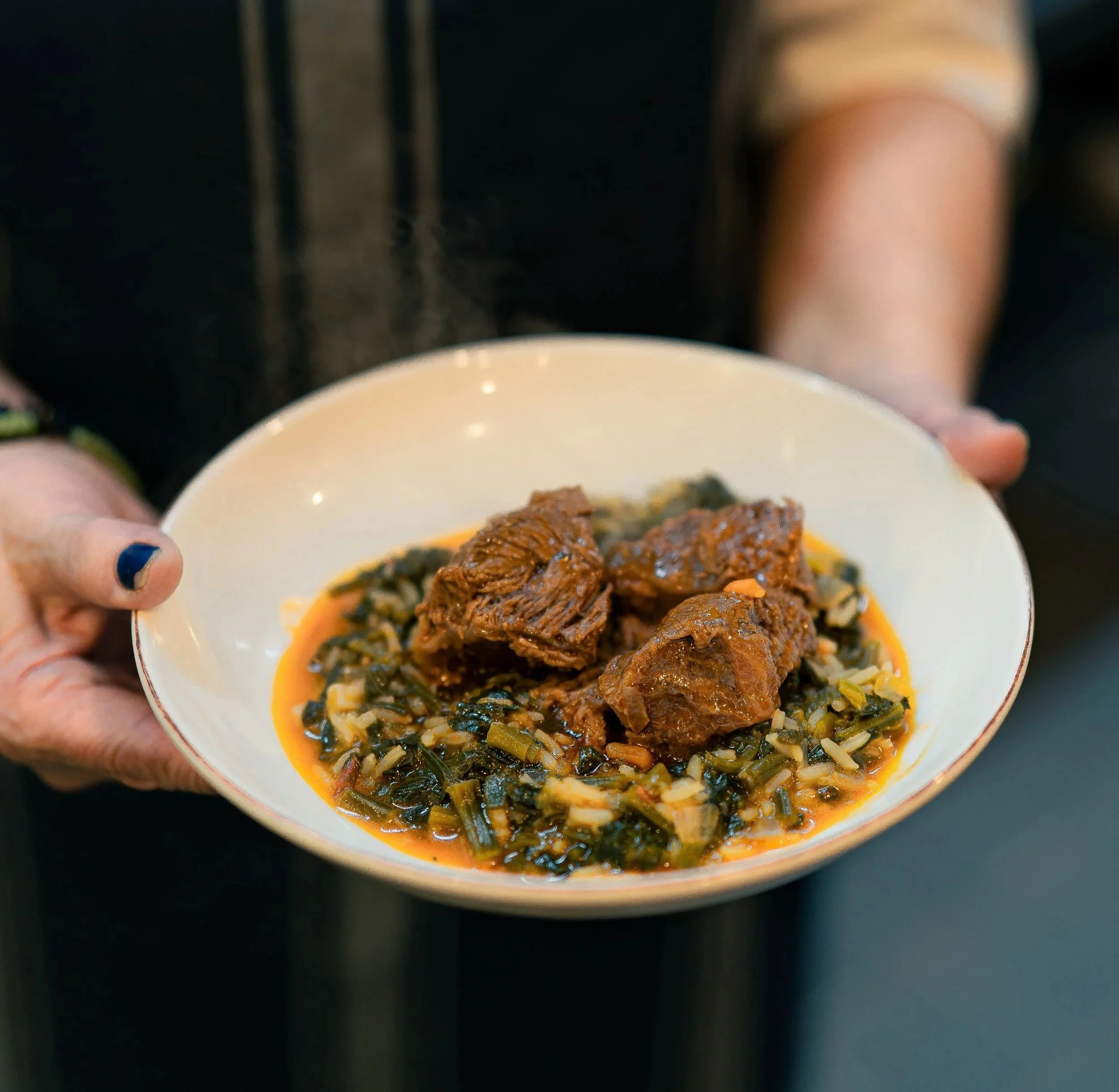
Nondas grew up in the Peloponnese, near Sparta, and the cooking of Southern Greece, olive oil, lamb, the vegetables and pulses of the southern landscape, runs through one half of this kitchen. Maria's family came from the Aegean coast of Asia Minor, from Smyrna, a great port city where the cooking that developed there carries that history in its spicing. Cumin and cinnamon worked through the meat, a sweet depth in the stuffed and slow-cooked dishes, a layered complexity that speaks to centuries of exchange between cultures rather than the cooking of any single one. It extends to the gyros too, though you might not immediately know why it tastes different. We marinate our meat in a combination of spices that needs time to settle in.
What people call the Stalactites flavour, that warmth, that depth, that quality of food that brings them back, came from a marriage. Nondas from the Peloponnese, Maria's family from Smyrna: the foundation of mainland Greek cooking meeting the aromatic warmth of the Smyrneika tradition. What came out of that union is what people have been returning to for nearly fifty years, food that is recognisably Greek but richer and warmer, with a depth that only comes from two traditions that have spent a lifetime learning from each other. This family has been setting it on the table with pride and with pleasure ever since.